Postcard Origins

Era guide · 1930–1945

Linen era

Run a finger across the card. That woven, cloth-like texture — unmistakable once you’ve felt it — is linen-finish stock, introduced around 1930, with high rag content that took ink in vivid, saturated, almost dreamlike color. The style’s defining product was C.T. Art Colortone, from Curt Teich & Co. of Chicago, the largest postcard printer in the world.

Linen cards are the best-documented cards in American history, because Teich’s production numbers encode their year outright. A number like 6BH2667 reads 1946, Art Colortone — our decoder does it for you, from the Curt Teich Archives’ own dating tables. If your linen card carries a Teich number, you can do better than an era: you can have the year.

The era’s edge is soft: linen stock lingered on some lines into the early 1950s even as glossy photochrome cards took over, so treat 1945 as the center of the transition rather than a wall.
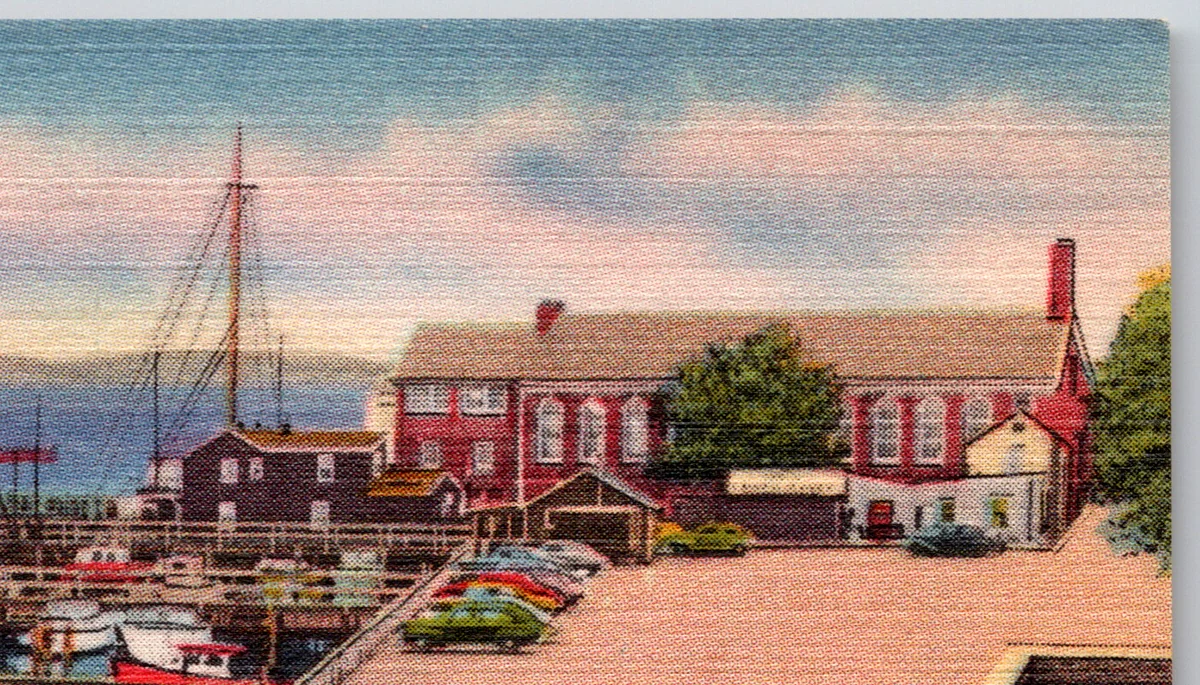
A close-up of a linen-finish postcard surface from the Postcard Origins collection, showing the woven cloth-like texture pressed into the card stock
This is the texture the whole era is named for — a close-up of the printed surface of a linen card in our collection. The weave is embossed into the stock itself, not printed on, which is why you can feel it with a fingertip as easily as see it. Scanned from the Postcard Origins collection
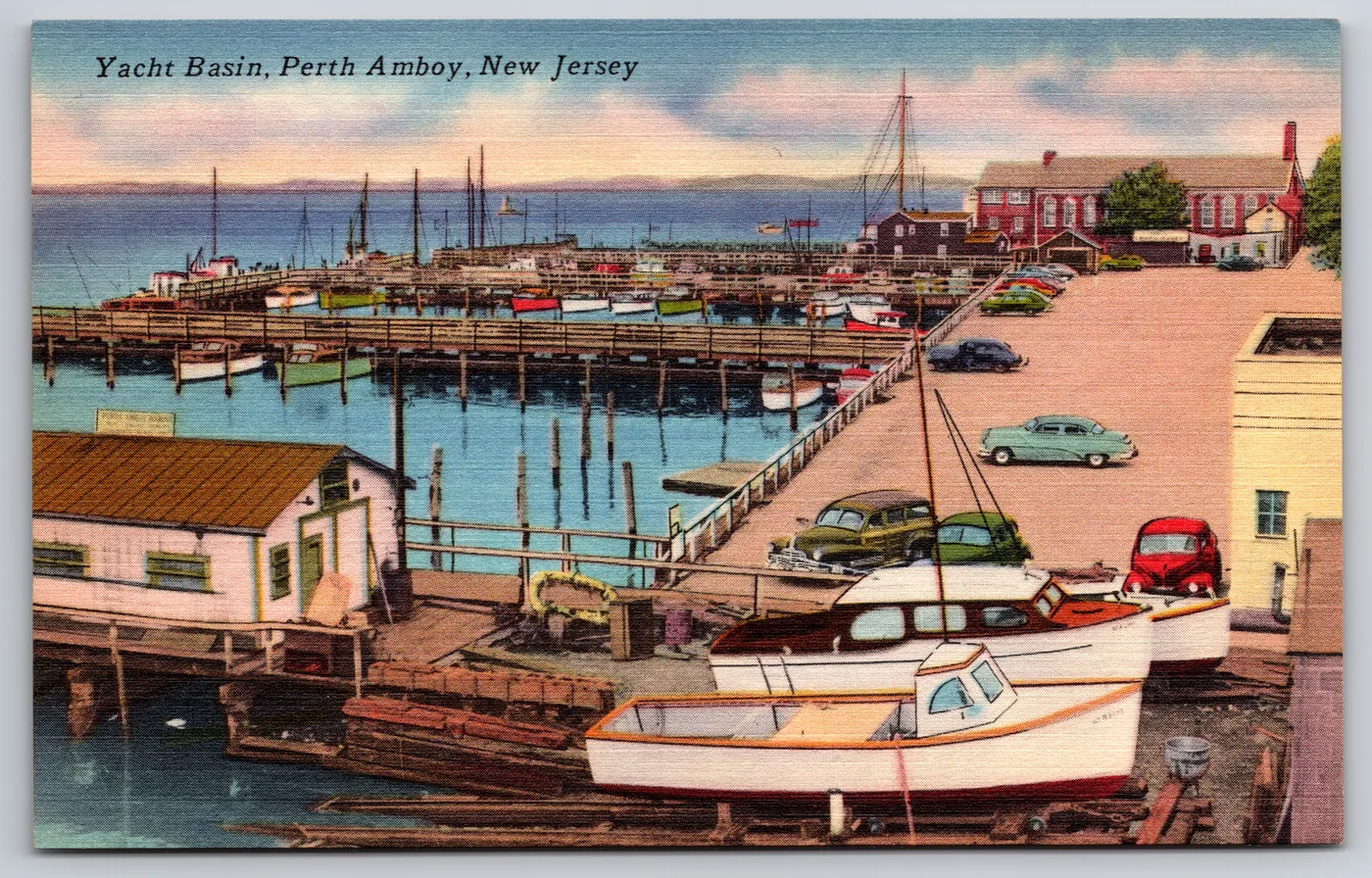
The front of a linen-finish postcard published by Coronet Greeting Card Co.
The card that close-up came from — the saturated, slightly dreamlike colour that linen stock gave printers. Scanned from the Postcard Origins collection
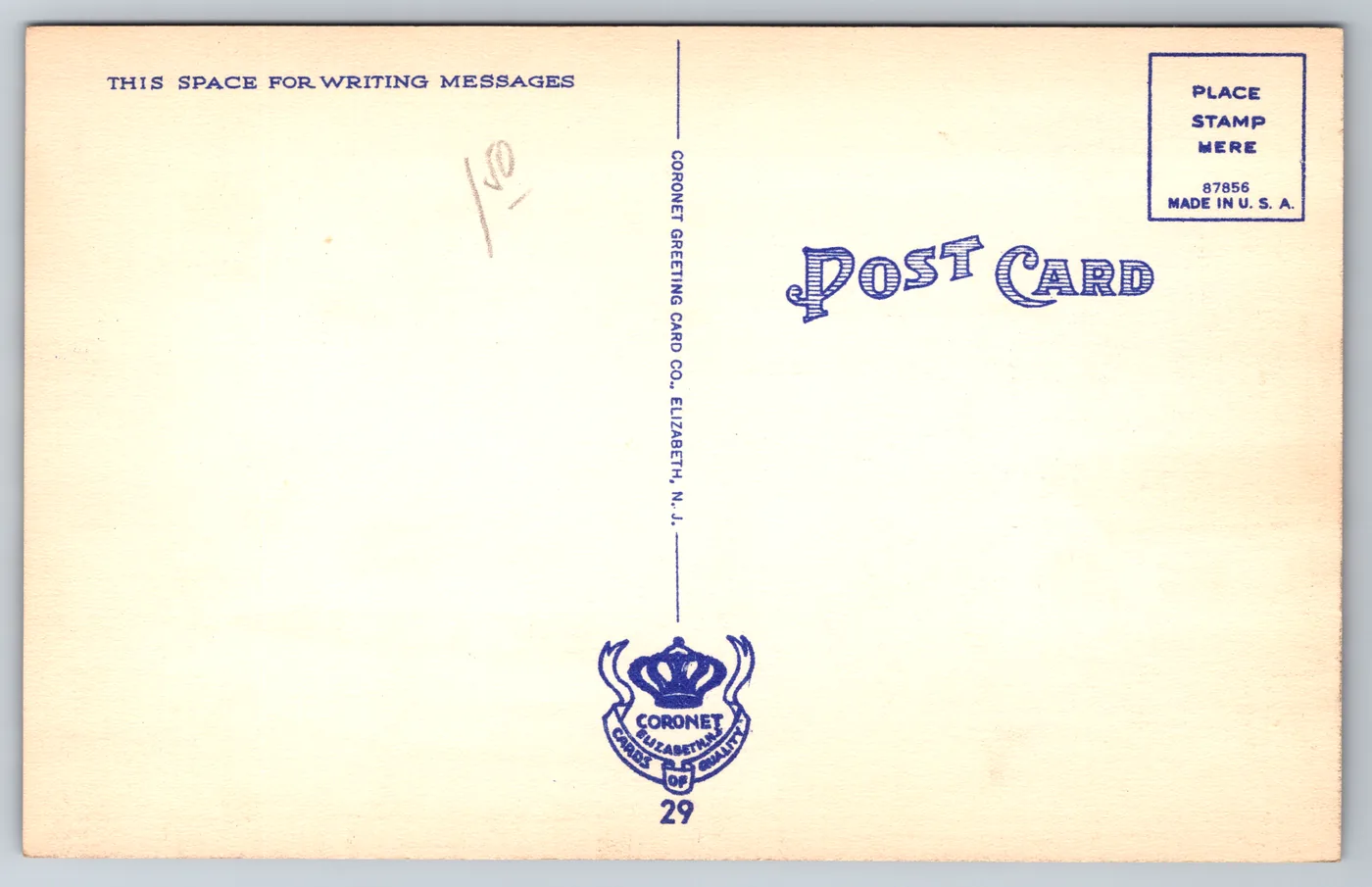
The back of the same linen postcard, imprinted Coronet Greeting Card Co., Elizabeth, N. J.
Its back names CORONET GREETING CARD CO., ELIZABETH, N. J. — and carries no Teich number. Linen was an industry-wide finish, not one company’s: without a Teich number this card gives you the era, not the year. From the collection

All eras Dating wizard