Era guide · 1901–1907
Undivided Back era
From 1901, privately printed cards could say “Post Card,” but one rule held: the back belonged to the address alone. No message line, no divider — an undivided back. Senders kept writing on the fronts, and printers began leaving small blank spaces in the image for exactly that purpose.
The era ends precisely: on March 1, 1907, the US Post Office permitted the back to be divided — message on the left, address on the right. An undivided back on a US-published card therefore dates it before March 1907 with unusual confidence for something printed with no date.
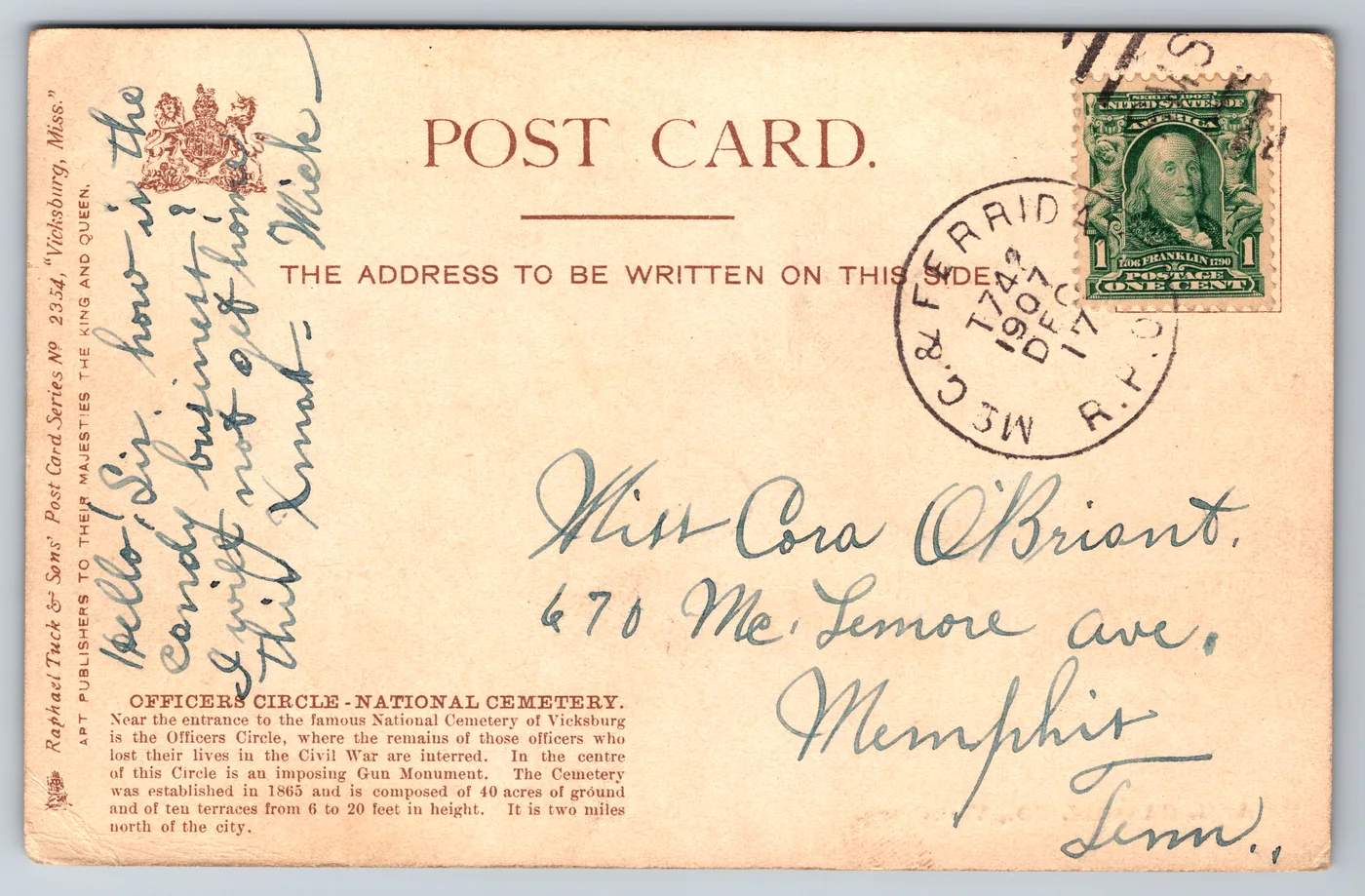
One caution for cards with European origins: Britain permitted divided backs in 1902 and France in 1904, so a divided-back card printed abroad can be a few years older than the same layout would suggest for an American card. Check the publisher line and any country imprint before applying US era boundaries.