Publisher · UK
Raphael Tuck & Sons
London (with a New York office from 1900) · founded 1866; postcards from 1894, into the 1960s
One of the most famous names of the Golden Age: a London firm founded by Raphael Tuck and his wife Ernestine in 1866, selling pictures and frames before moving into postcards, and opening a New York office in 1900 to reach the US market.
It held a Royal Warrant — granted first by Queen Victoria in 1893 — and most cards carry the line ART PUBLISHERS TO THEIR MAJESTIES THE KING AND QUEEN. That King-and-Queen wording belongs to the reign of Edward VII (1901–1910), so it is itself a rough date bracket.
American scenes were often photographed for Tuck but the cards were printed in Europe — Saxony, Germany, England — then shipped back for sale. Cards were organised into numbered series.
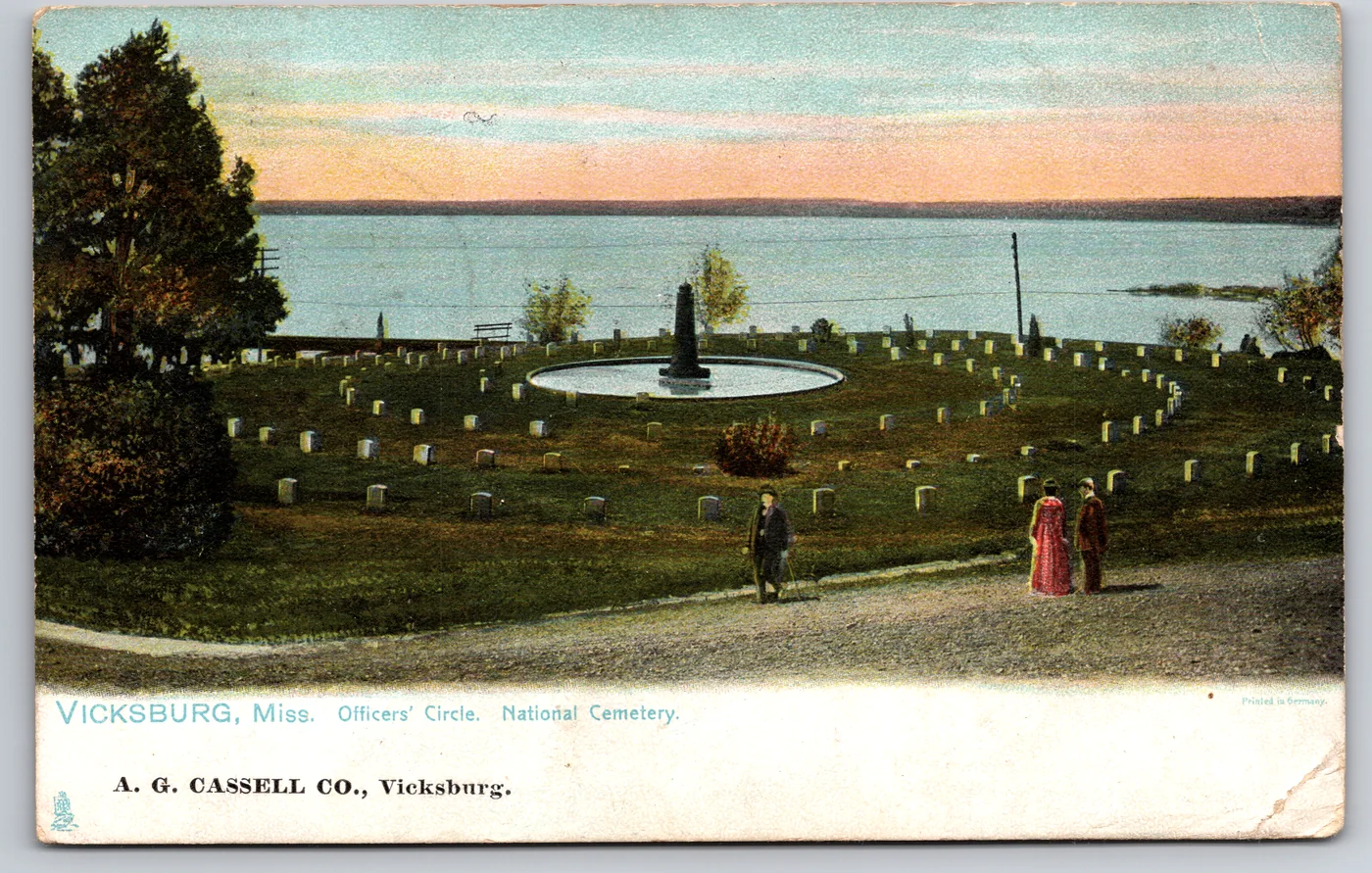
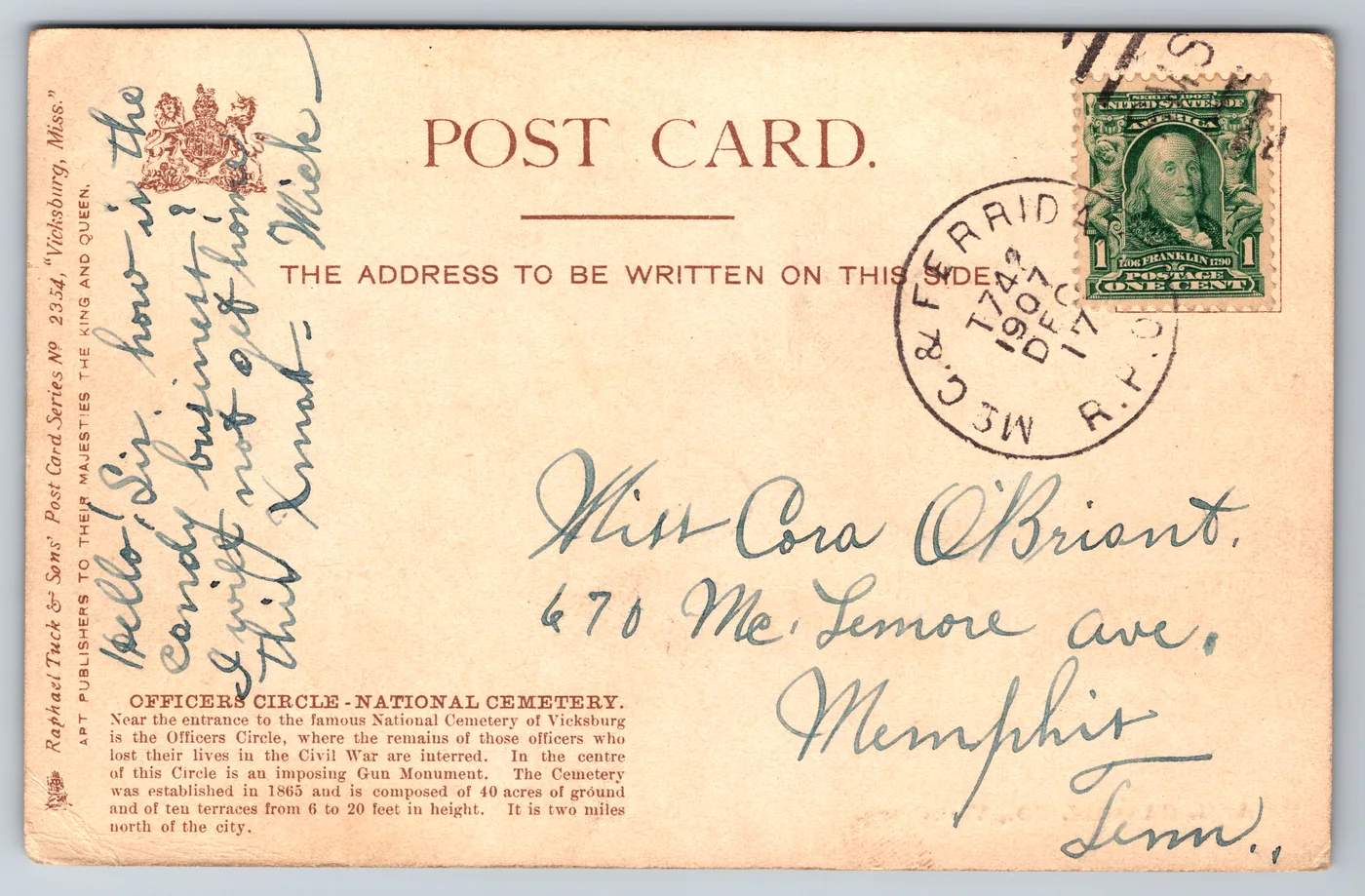

Dating this publisher’s cards
The ART PUBLISHERS TO THEIR MAJESTIES THE KING AND QUEEN line dates a card to 1901 or later (the Edwardian royal warrant). The strongest clue on an early Tuck, though, is the back format: an undivided back — one side for the address only — belongs to the era before divided backs were allowed in March 1907. Many undivided-back cards were later reprinted with divided backs, so an undivided back marks an early printing. Series numbers exist but there is no simple number-to-year key; date from the back format, the warrant wording, the stamp and the postmark.
Sources: Raphael Tuck & Sons founded 1866, first Royal Warrant 1893, first postcard 1894, US office 1900, cards printed in Europe: brisray.com postcard-publishers reference; AbeBooks (Raphael Tuck & Sons publisher notes); Undivided backs predate the March 1907 divided-back change and many were later reprinted with divided backs: brisray.com; undividedbackpostcard.com. See methodology.