Postcard story
The Samarkand: one hotel, three postcards
Three cards in the collection show the same building — a Persian-fantasy hotel on a Santa Barbara hillside — made three completely different ways within a few years of each other. Set side by side, they are a small lesson in how one subject moved through the postcard trade of the 1920s, and how each kind of card gives up its date differently.
A Persian fantasy in Santa Barbara
The Samarkand did not begin as a hotel. In 1915 Dr. Prynce Hopkins built “Boyland II,” a private boys’ school, on a hillside above Santa Barbara, and laid out its grounds in an elaborate Persian motif: garden terraces, a rose pergola, a colonnade of white concrete pillars, and an artificial lake that held a sculpted relief map of the world for teaching the boys geography.
When Hopkins left for Europe in 1918 and the school failed, his mother, Mary Hopkins, turned the property into a hotel. It opened in 1920 as the Samarkand Persian Hotel — the name, according to one of its promotional flyers, meaning “heart’s desire.” For twenty years it was one of the city’s showpieces, its eighty pillars framing a reflecting pool, its rooms decorated in Persian red, brown, gold and orange. It operated as a hotel until 1940, passed through several owners — among them the heiress Alma Spreckels — and housed Marines during the war. The gardens are gone now; part of the grounds became housing, and sixteen acres are today a retirement community that still carries the name.
Three cards, three ways of seeing
Each of these went on sale while the Samarkand was a working hotel, so each one is a card of the years 1920–1940. What sets them apart is how they were made — and, conveniently, each dates by a different clue.
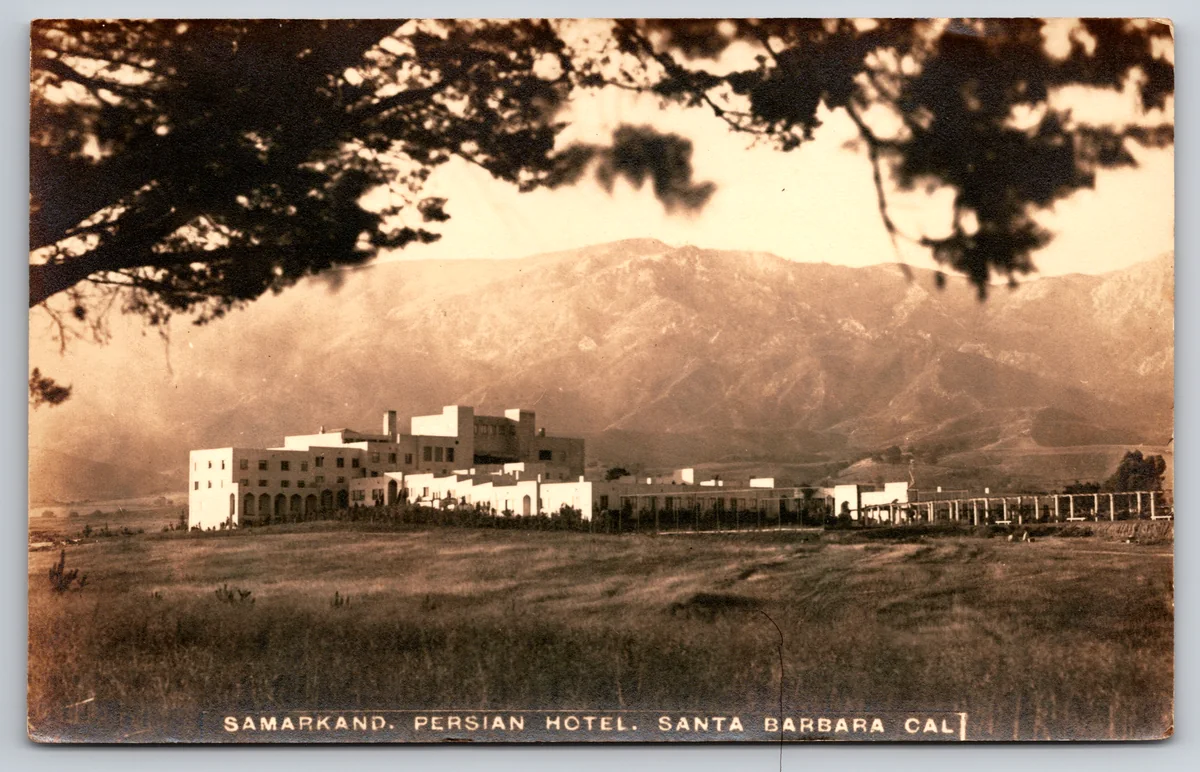
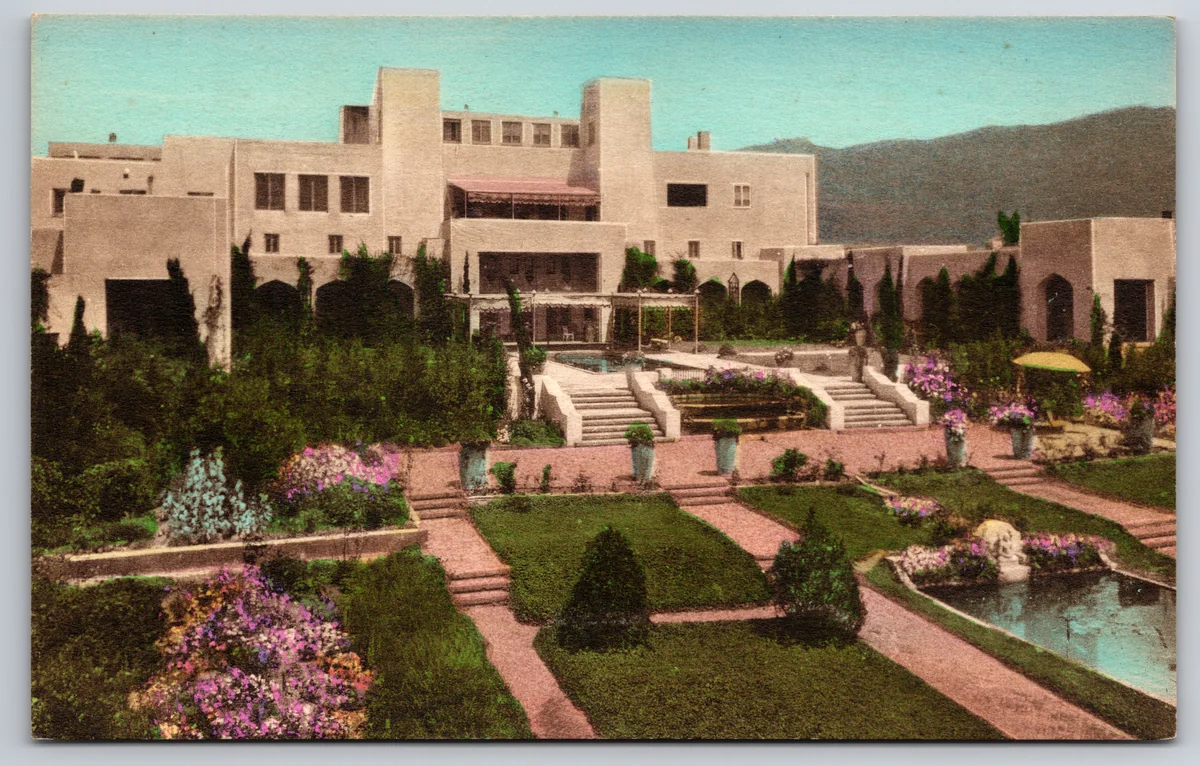
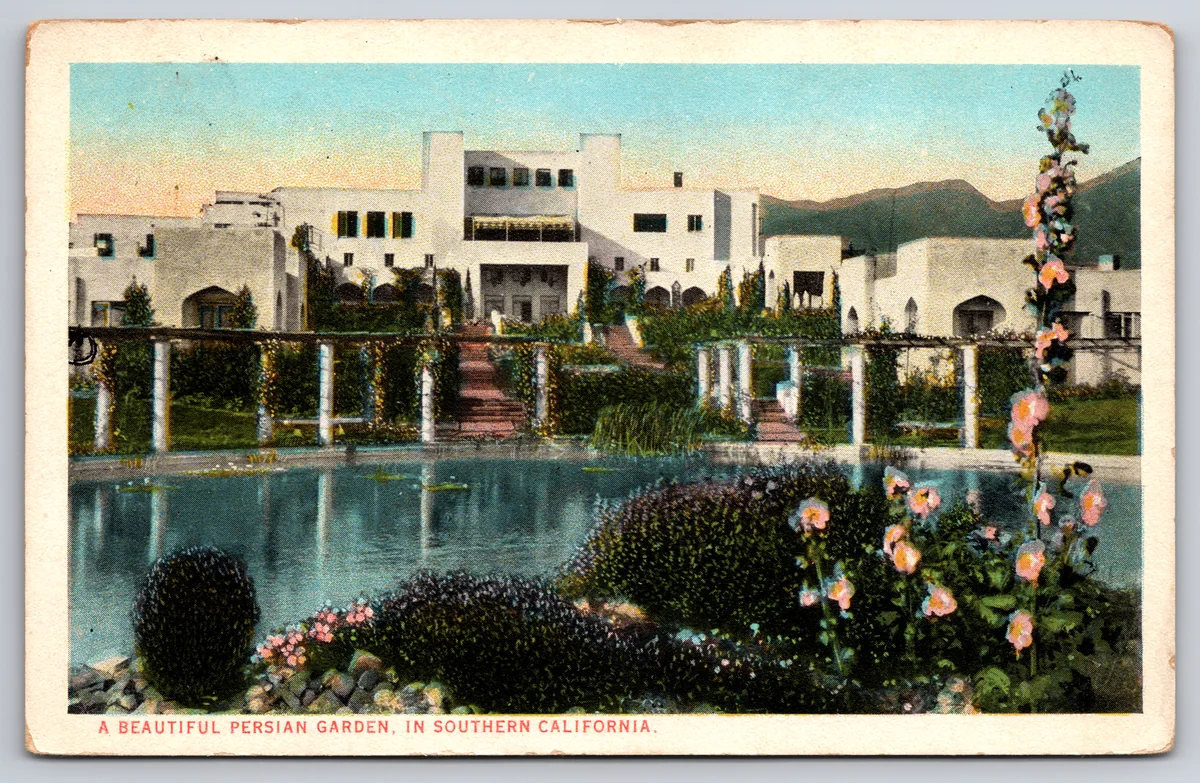
A real photograph, a hand-tinted print, and a color lithograph — one building, three techniques, all within a few years, each dated by a different clue: the stamp box, the publisher and its style, the Teich number and the postmark. That is the whole method of this site, gathered onto one hillside.